
Systems Drug Discovery
The Schürer Lab develops integrated approaches to drug discovery that connect biomedical data, artificial intelligence, molecular modeling, medicinal chemistry, and experimental biology. Our research spans the development of computational methods and biomedical data resources through molecular design and experimental validation, with the goal of translating complex biological information into actionable therapeutic hypotheses.
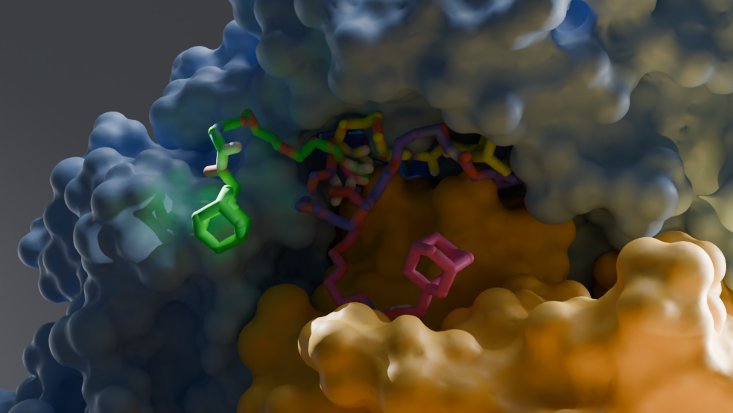
Our work is organized across five interconnected research areas:
AI & Multimodal Drug Discovery
We develop AI and machine learning approaches that integrate chemical, molecular, and biological data to predict drug activity, response, resistance, and therapeutic combinations.
Structure-Based Drug Design & Medicinal Chemistry
We combine molecular modeling, virtual screening, medicinal chemistry, and experimental validation to discover and optimize small-molecule probes and therapeutic leads, with a focus on kinase drug discovery.
Targeted Protein Degradation & Induced Proximity
We develop computational and experimental strategies for targeted protein degradation and other induced-proximity modalities, spanning degrader design, ternary-complex modeling, linker optimization, and molecular dynamics.
FAIR Pharmacology & Biomedical Knowledge Systems
We build ontologies, curated pharmacological datasets, and interoperable knowledge resources that make complex biomedical information more reusable, computable, and accessible for drug discovery and AI.
Precision Oncology & Cancer Data Science
We integrate clinical, genomic, molecular, and pharmacological data to support translational cancer research, precision oncology, and data-driven discovery at Sylvester Comprehensive Cancer Center.
AI & Multimodal Drug Discovery
We develop artificial intelligence and machine learning approaches that connect chemical structure, molecular targets, functional genomics, cellular state, and disease context to support drug discovery. Our work spans kinome-wide activity prediction, virtual screening, drug sensitivity and resistance modeling, and prediction of therapeutic combinations. By integrating complementary data modalities, we aim to move beyond single-assay predictions toward models that capture how compounds behave across biological systems.
Featured Projects
- KNet: deep learning-based kinome-wide compound activity prediction and virtual screening.
- SensitivitySeq / DrugSSeq: multimodal approaches for predicting drug sensitivity across cancer models.
- SynergySeq / scFOCAL: computational approaches for identifying drug-response states and therapeutic combinations.
Structure-Based Drug Design & Medicinal Chemistry
We combine structure-based modeling, virtual screening, molecular simulation, medicinal chemistry, and experimental validation to discover and optimize small-molecule probes and therapeutic leads. A major focus of this work is the development of chemical tools and drug candidates for cancer-relevant and understudied kinases, connecting computational hit discovery with structure-activity relationships, compound optimization, and biological validation.
- PNCK: discovery and optimization of small-molecule inhibitors for an understudied kidney cancer-associated kinase.
- BUB1B: development of chemical approaches to interrogate and therapeutically target a mitotic kinase dependency in cancer.
Targeted Protein Degradation & Induced Proximity
We develop computational and experimental strategies for targeted protein degradation and other induced-proximity modalities. Our work spans degrader design, linker optimization, ternary-complex modeling, and molecular dynamics, with the goal of understanding how molecular architecture and protein-protein interactions shape productive degradation. We also develop computational tools and workflows that support the design and evaluation of degrader systems across therapeutic targets.
- HIV-1 Reverse Transcriptase and Protease Degraders: developed in collaboration with the University of Alabama, combining degrader design, molecular modeling, and experimental evaluation against key HIV-1 proteins.
- PROTAC Builder: a design platform for assembling degrader components and supporting downstream computational modeling.
- V-LiSEMOD: structure-guided identification and prioritization of ligands and degrader-ready warheads.
- PyMACS: automated molecular dynamics workflows for protein-ligand, protein-protein, and multicomponent systems including PROTAC ternary complexes.
FAIR Pharmacology & Biomedical Knowledge Systems
We develop ontologies, curated pharmacological datasets, and interoperable knowledge resources that make complex biomedical information easier to organize, integrate, and reuse. This work supports both human researchers and computational systems by improving the quality, consistency, and accessibility of assay, target, compound, and functional genomics data for drug discovery.
- DrugMatrix FAIR Update: Deep curation and FAIR enhancement of the DrugMatrix in vitro pharmacology dataset to improve metadata quality, interoperability, and downstream reuse.
- Opioid Drug Ontology Data Portal: A curated pharmacology resource connecting opioid compounds, targets, assays, and bioactivity data through ontology-based annotation.
- MorPhiC: The Schürer Lab contributes to the NIH Molecular Phenotypes of Null Alleles in Cells program through its Data Resource and Administrative Coordinating Center, supporting large-scale functional genomics data integration and dissemination.
- BioAssay Ontology: A community resource for standardizing and describing biological assays, pharmacology, and screening data.
- TIN-X: A target importance and novelty exploration resource designed to help researchers identify and prioritize understudied therapeutic targets.
Precision Oncology & Cancer Data Science
We develop data science approaches and research infrastructure that integrate clinical, genomic, molecular, and pharmacological information to support translational cancer research at Sylvester Comprehensive Cancer Center. This work focuses on making complex cancer datasets more accessible and analysis-ready, enabling researchers to study patient populations, molecular alterations, treatment response, and clinically relevant patterns across diverse cohorts.
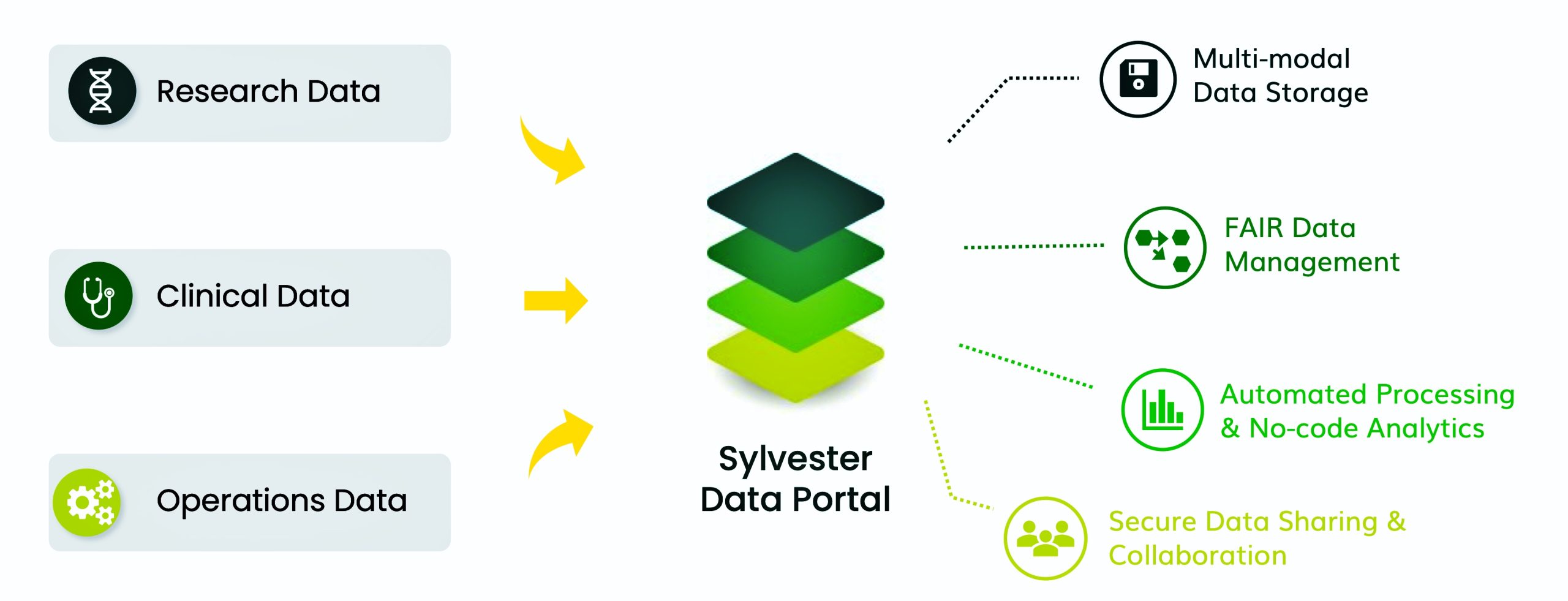
- Sylvester Data Portal: A multimodal research platform for integrating, harmonizing, and analyzing clinical and molecular cancer data across Sylvester Comprehensive Cancer Center.
- AACR Project GENIE: Integration and analysis of clinicogenomic data through Sylvester’s participation in the international cancer data-sharing consortium.
- Florida CARES / PAC3R: Infrastructure and collaborative efforts supporting cancer data sharing and computational research across institutions in Florida.
- Diverse Cancer Data and AI Initiatives: Development of representative cancer datasets and computational approaches for studying diverse patient populations and improving translational AI models.